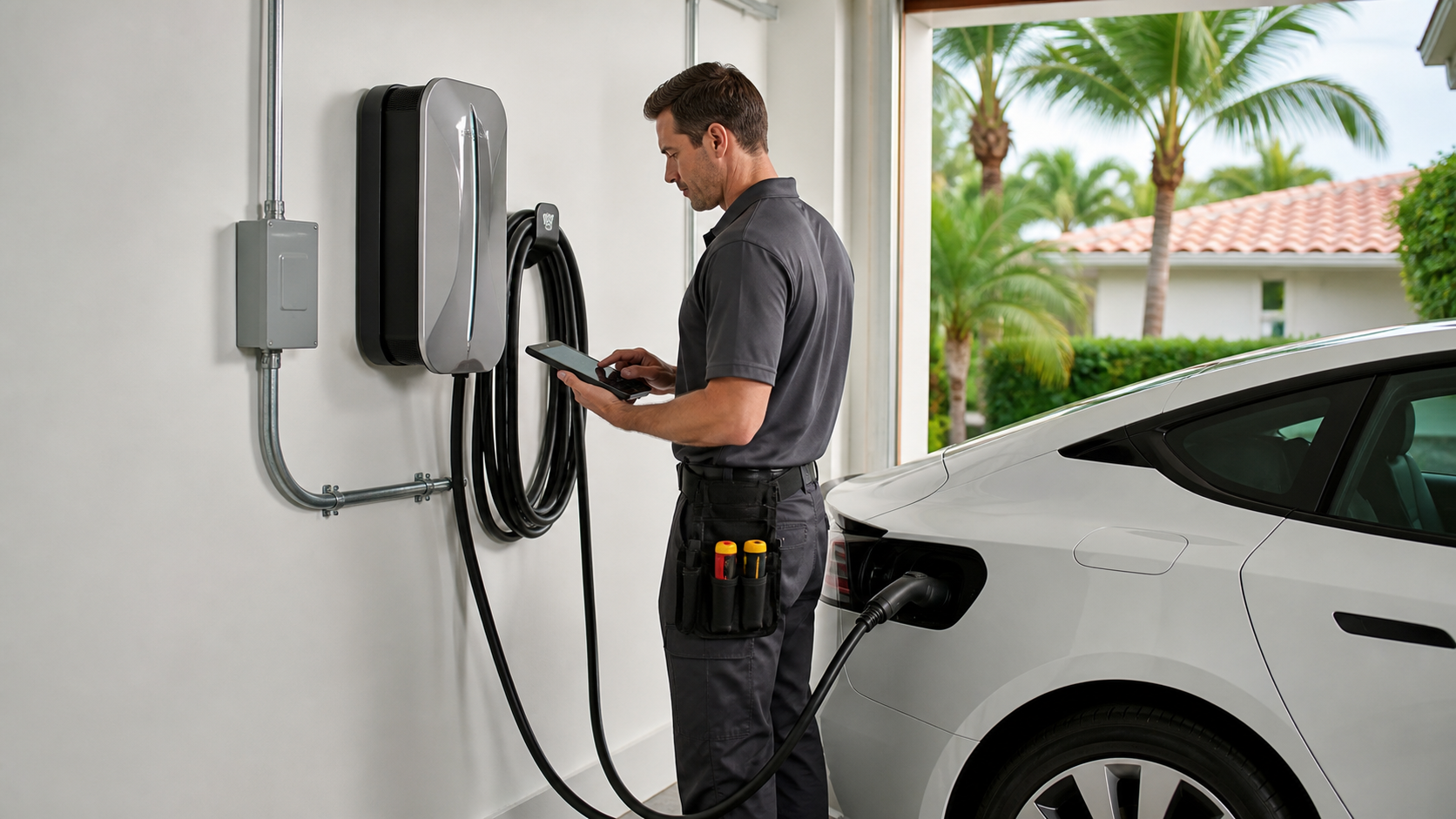
Home EV Charger Options for Palm Beach County, Florida Residents
Choose home charging equipment based on the vehicle, electrical system and parking location rather than a product name alone. EV Charger Installation Palm Beach helps homeowners compare connector formats, hardwired and plug-in connections, available capacity and compatible load-management options. Call Now for equipment planning.
Not sure which home EV charger option fits your property?
Tell us about the vehicle, parking location and current electrical setup.
Compare Connectors, Installation Types and Capacity Options in Palm Beach County, Florida
Palm Beach County homeowners can compare home charging equipment by looking at the vehicle connection, selected charger, parking arrangement and electrical capacity together. EV Charger Installation Palm Beach provides planning for residential home EV charger installation, including Level 2 charging equipment, dedicated charging circuits and charger placement.
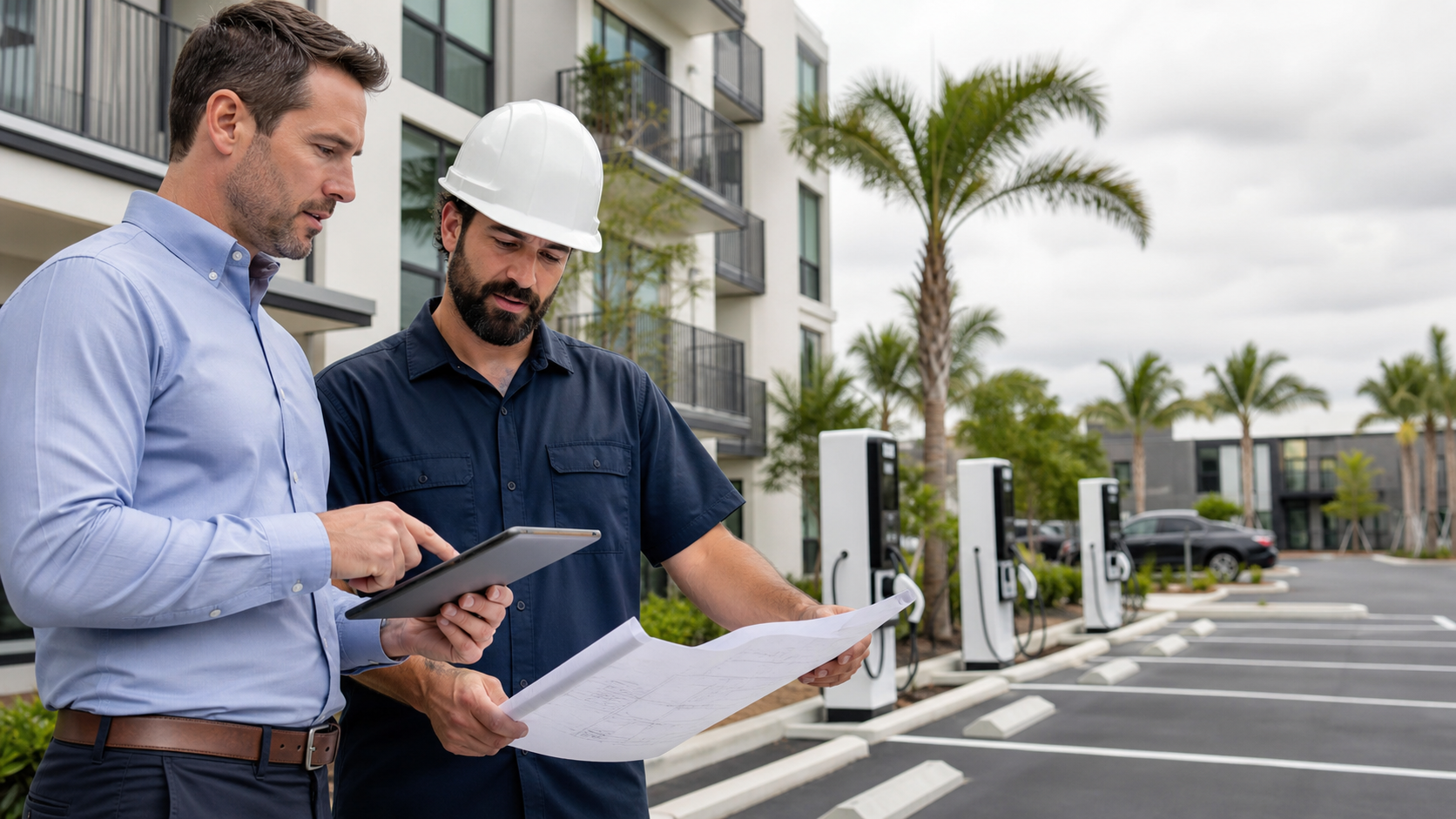
J1772, J3400 and NACS Charging
The vehicle inlet, charger cable and any appropriate adapter arrangement need to work together. J1772, J3400 and NACS terminology can help identify the connection, but the actual vehicle and equipment must still be confirmed. Call Now with the model information for guidance.
Compare Connector Options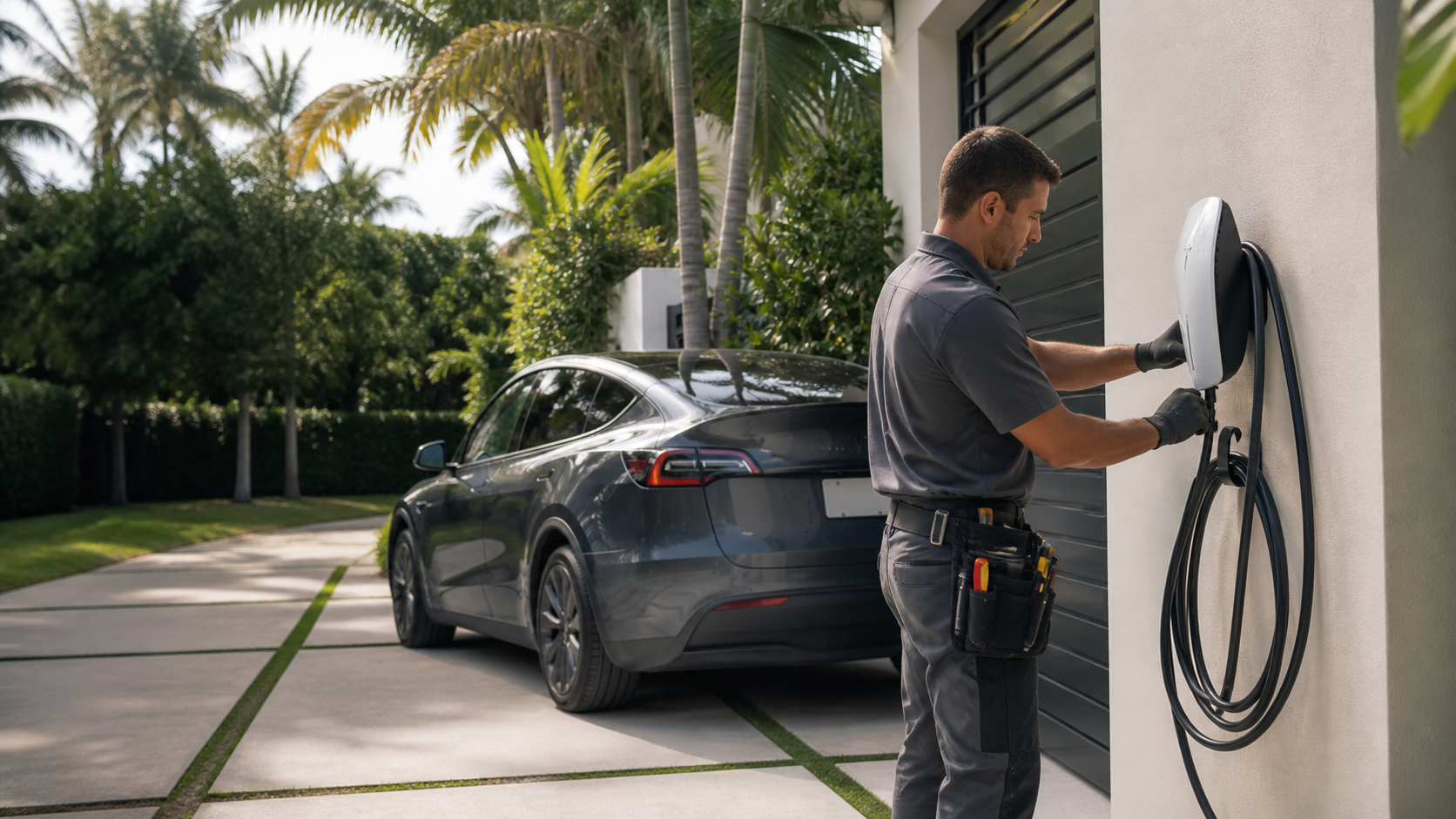
Hardwired or Plug-In Charging
Hardwired equipment connects directly to a dedicated circuit at a fixed mounting point. Plug-in equipment requires a compatible 240-volt charging receptacle installed for the selected charger. The best fit can depend on the chosen charger and where charging will take place at home.
Compare Connection Types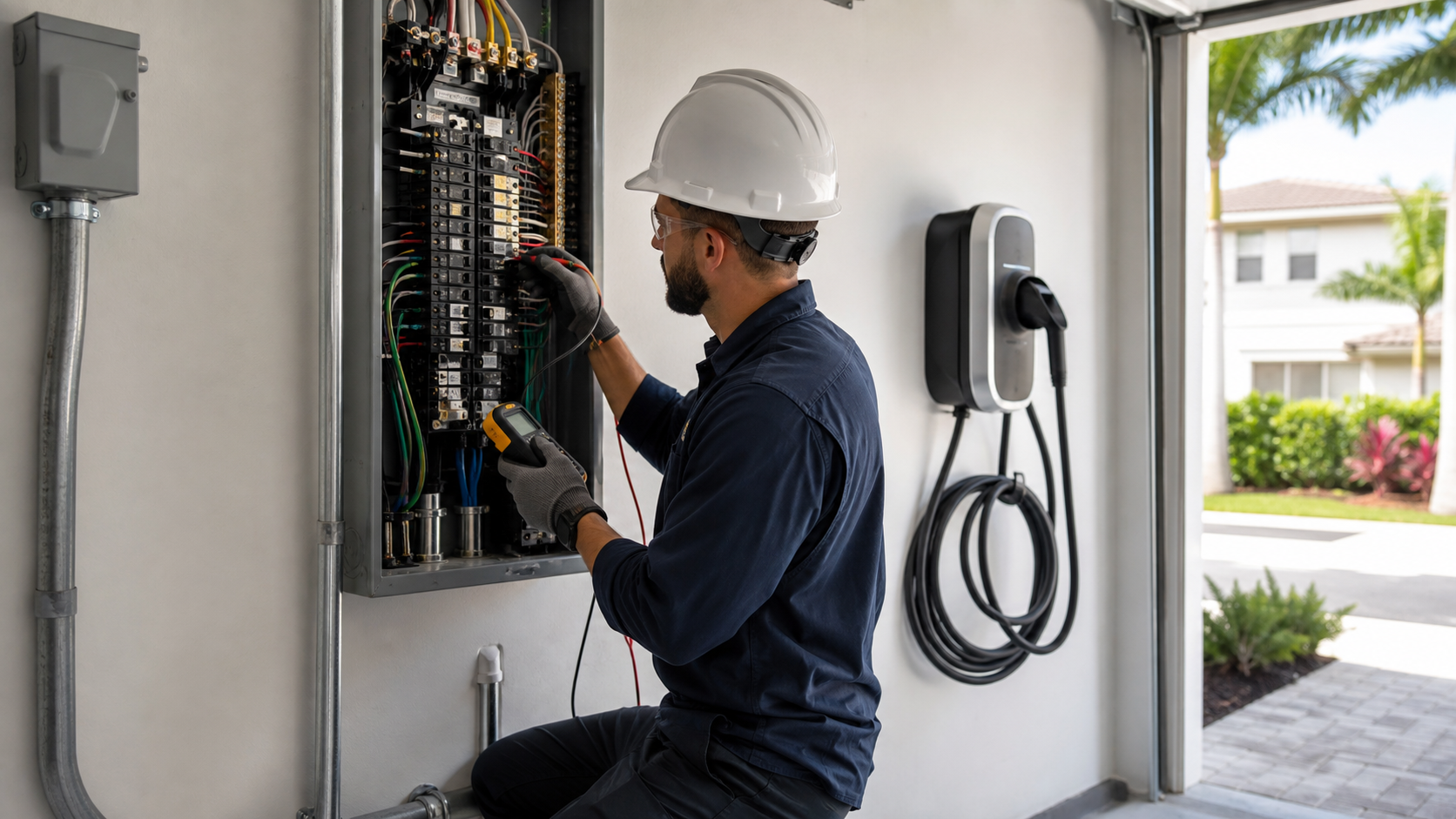
Charger Output and Panel Capacity
A charger’s maximum advertised capability does not mean that setting fits every vehicle or home. Daily charging needs, vehicle capability and available residential electrical capacity should guide the intended configuration. A panel capacity evaluation helps determine how a dedicated charging circuit can be planned.
Review Panel Capacity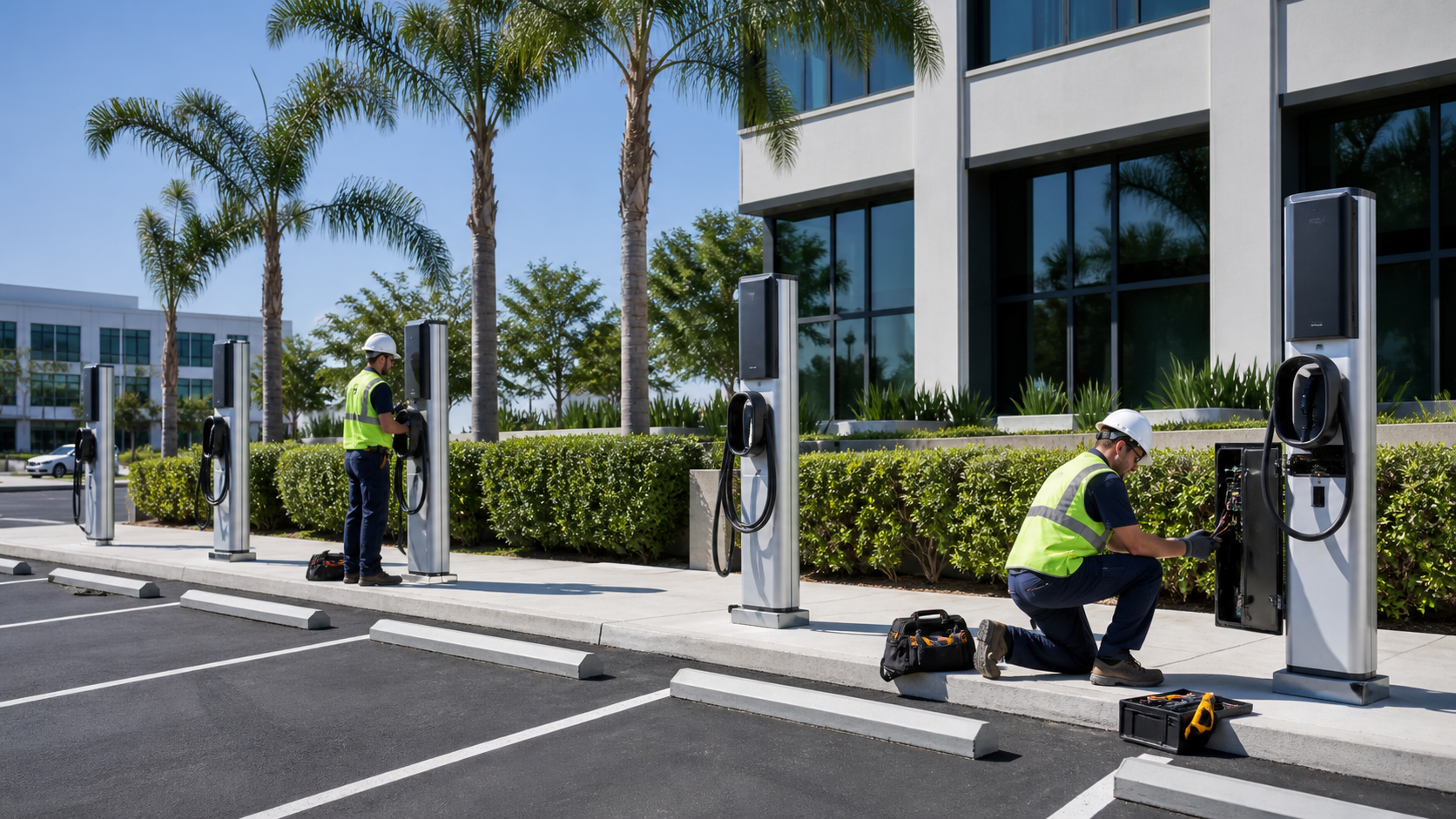
EV Charging Load Management
Compatible load-management equipment may coordinate charging demand with the capacity available at a home. Suitability depends on the charger, panel, household loads and complete electrical design. Call Now to request a Palm Beach County evaluation.
Review Load Management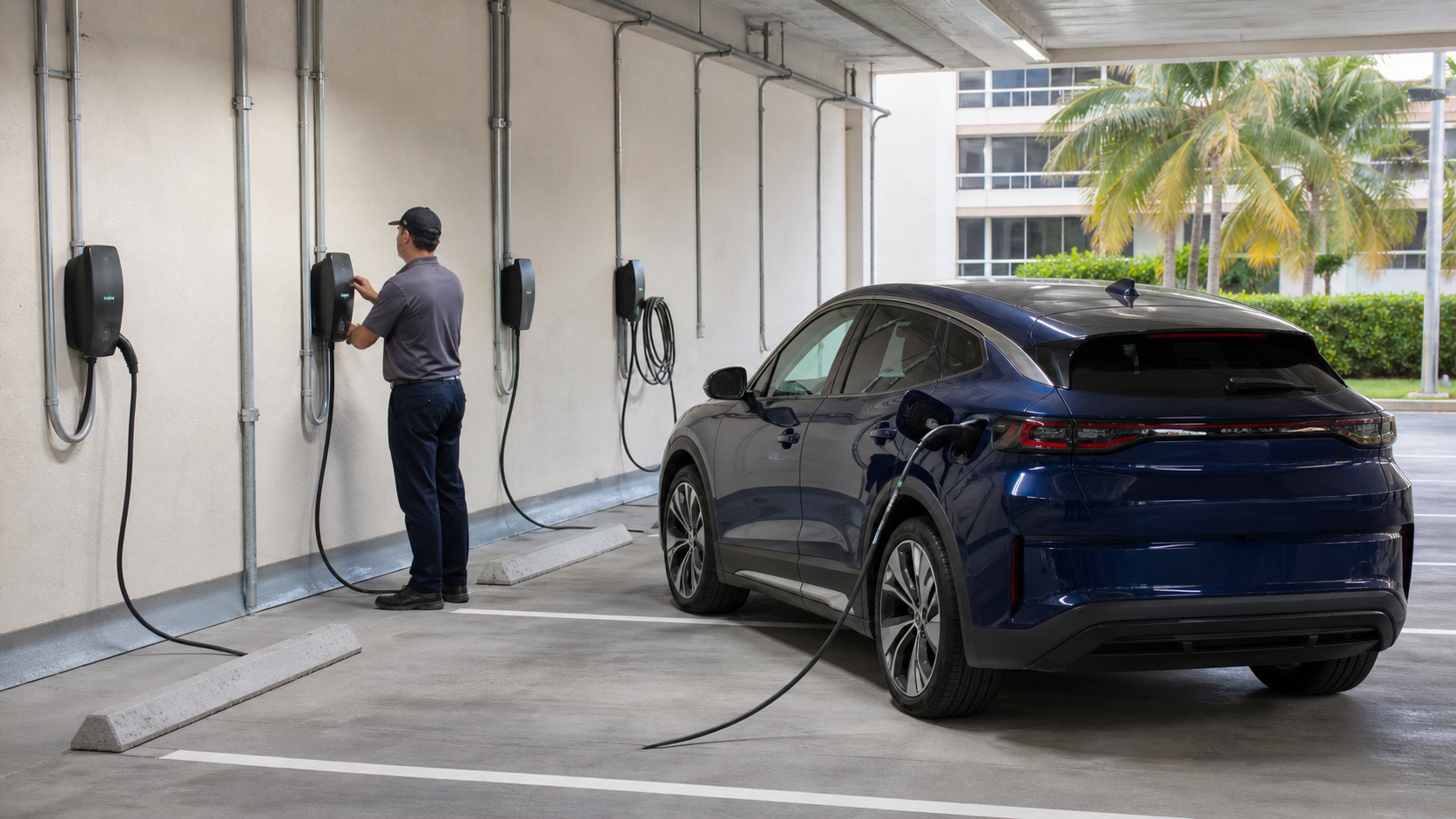
Outdoor EV Charger Placement
Outdoor charger placement should reflect the selected equipment, parking location and planned connection type. A fixed hardwired charger and a plug-in charger can have different placement and replacement considerations. EV Charger Installation Palm Beach can help homeowners plan an outdoor residential charging location.
Plan Outdoor Charger Installation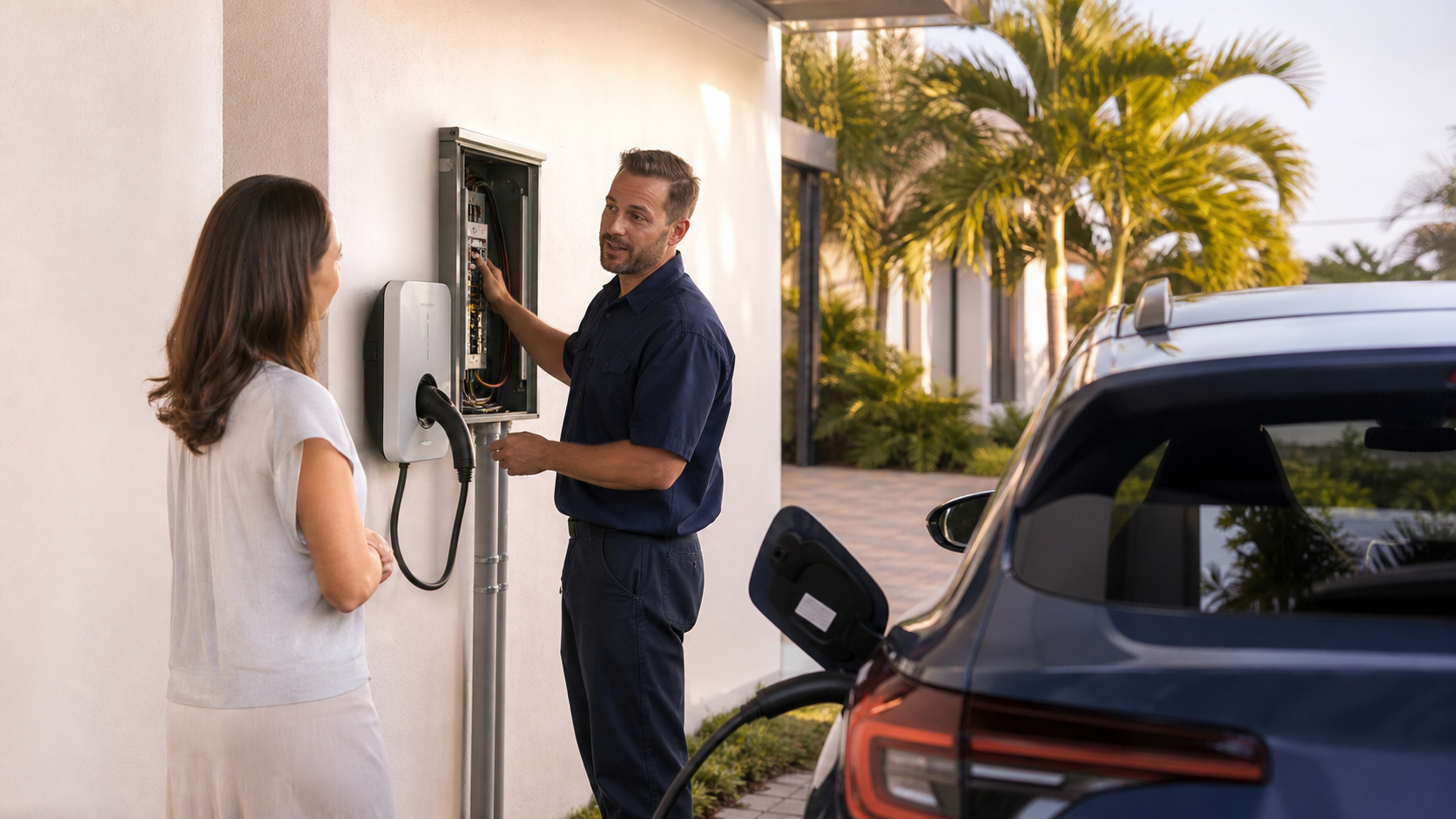
Dedicated Charging Circuit Options
A dedicated EV charging circuit supports the selected residential charger configuration. The circuit plan should be considered with charger output, panel capacity and the location where the vehicle will park. Request installation planning when choosing equipment for a new home charger or replacing an existing unit.
Request Circuit InstallationCompare equipment details through our home charging connector guide or review EV charger load management for a Palm Beach County home.
Choosing between hardwired and plug-in charging equipment?
Request equipment and panel planning for the vehicle, charger and intended installation location.
What to Consider Before Choosing a Home EV Charger
Home EV charger choices work best when equipment selection and installation planning happen together. A residential setup can involve Level 2 charging, a Tesla Wall Connector installation, hardwired equipment or a compatible 240-volt receptacle, depending on the selected charger and home. Call Now to discuss the options.
Start With the Vehicle and Charger
The vehicle connection and selected charger provide a starting point for equipment planning. Connector terminology can help identify the needed arrangement, while the actual vehicle, charger cable and any appropriate adapter still need to be considered together.
Choose the Connection Type
Hardwired charging equipment connects directly to a dedicated circuit at a fixed location. Plug-in charging equipment uses a compatible 240-volt charging receptacle. The connection choice can affect where the charger is placed, whether it is intended for outdoor use and how equipment may be replaced later.
Evaluate Electrical Capacity
Available panel capacity is part of selecting a residential Level 2 charging configuration. EV Charger Installation Palm Beach evaluates daily charging needs, vehicle capability, charger output and the home’s available electrical capacity before a dedicated charging circuit is selected.
Plan Charger Placement
Charger placement should suit the home’s parking location and the selected equipment. Garage, carport, driveway and outdoor arrangements can lead to different installation considerations. Planning the mounting point and connection type before installation helps keep the equipment choice aligned with the property.
Consider Future Charging Needs
A home may need charging for one vehicle today and different equipment needs later. Replacement flexibility, a second EV and the desire for EV-ready planning can affect the charger and circuit decision. Discuss those plans while reviewing the current installation.
Equipment and Panel Planning for Palm Beach County Homes
Palm Beach County homeowners can request residential charging planning for a new EV, a replacement charger or a two-EV household. Review dual-EV home charging installation or EV-ready home prewiring when future charging needs are part of the decision.
Which Home EV Charger Setup Is Right for Your Property?
The right setup depends on the vehicle, selected charger, connection type, parking location and available electrical capacity. Palm Beach County residents often begin by choosing between hardwired and plug-in equipment, then plan a dedicated charging circuit and suitable charger placement around the home’s electrical system.
Hardwired Level 2 Charging
Hardwired Level 2 charging equipment connects directly to a dedicated circuit at a fixed mounting point. This option can suit homeowners who have selected a permanent charger location in a garage, carport, driveway or outdoor area. The equipment and electrical-panel capacity should be evaluated before installation.
Plug-In Charging Equipment
Plug-in charging equipment requires a compatible 240-volt charging receptacle for the selected charger. This connection option may be considered alongside charger placement and replacement flexibility. The selected charger and intended residential setup should guide the receptacle and circuit planning.
Tesla Wall Connector Installation
Tesla Wall Connector installation is a residential home EV charger installation option for homeowners selecting that equipment. The planned location, dedicated charging circuit and available electrical-panel capacity should be evaluated with the charger and vehicle needs in mind.
Load Management and Two-EV Planning
Compatible load-management equipment may be considered when charging demand and available home capacity need to be coordinated. For households planning to charge two EVs, the complete electrical design should also account for the chargers, panel, household loads and intended daily charging routine.
Not sure which home charger arrangement fits your property? Compare home charging connectors, review load management for EV charging, or request equipment and panel planning.
Palm Beach County Home EV Charger Questions
Quick answers about home charging connectors, hardwired and plug-in equipment, electrical-panel capacity and load-management options for residential EV charging.
Home EV charger option details: The vehicle, selected charger, connection type, placement and electrical-panel capacity all affect residential charging planning. EV Charger Installation Palm Beach helps Palm Beach County homeowners compare those options before installation.
Need Help Choosing a Home EV Charger in Palm Beach County?
EV Charger Installation Palm Beach provides residential home EV charger installation planning for Level 2 charging, Tesla Wall Connector installation, dedicated charging circuits, charger placement and electrical-panel capacity evaluation. Palm Beach County homeowners can share the installation address, parking location and charging goals with EV Charger Installation Palm Beach, then request service. Call Now
Residential EV Charger Installation Near Palm Beach County
View the West Palm Beach and Palm Beach County, Florida service area and request residential EV charger installation.